Worth a Watch
Jessica Lahey on The Gift of Failure
Jessica Lahey
An educator and parent shares an honest, grounded talk on how trying to manage a child's path or constantly praising their outcomes can increase anxiety and risk avoidance.

When I was teaching, I thought a lot about how to give students real ownership in our classroom. I wanted our room to be a place where they felt trusted to explore who they were and practice making their own choices.
Even with those intentions, I found myself bumping into the edges of my own influence quite a bit.
One year, teaching a unit inspired by Yuyi Morales's picture book, Dreamers, we talked about courage, new beginnings, and hopes for the future. I introduced the students to lots of different careers and possibilities, and then, in our teaching slides, I put each student's face into the role they'd chosen. They got to see themselves imagined in all kinds of possible futures.
It was a sweet week, and the unit became a staff and student favorite. But as I watched some of my students proudly choose to be teachers, a few less sweet thoughts crept in. Were they choosing teaching because it genuinely appealed to them, or because of the relationship we had? Did they want me to be proud of them? Did some part of them know that choosing something I loved might make me especially happy?
I couldn't know. But I couldn't stop wondering either. I was trying to give them space to imagine their own futures, knowing I was still part of the picture. Even in a project about open possibility, I had set the options on the table.
Even in a project about open possibility, I had set the options on the table.
On influence

When we look at how adults motivate kids, there's some interesting research about that tension. In their foundational 2000 work on Self-Determination Theory, psychologists Edward Deci and Richard Ryan described the importance of environments that support autonomy, competence, and relatedness. The way we encourage someone is important to look at. Sometimes our encouragement can leave room for their own sense of choice, sometimes can carry pressure toward a particular response.
Once I started looking closer at this dynamic, I saw it everywhere. I cared deeply about building community, and I had clear expectations about treating the adults at school with respect. On mornings when a student walked in overwhelmed, tired, or guarded, I would sometimes catch myself expecting them to hang their backpack responsibly or give a polite greeting. Those mornings, I had to stop and ask myself if I was helping them connect, or if I was asking them to perform politeness for the sake of the adults.
A 2021 conceptual analysis by Amy Pearson and Kieran Rose on autistic masking gave me another lens for thinking about this. They describe the ways autistic people might suppress natural responses and adopt more socially expected ones, sometimes at significant personal cost. It reminded me to be careful about what we learn from behavior. A student can appear to be doing exactly what we hoped while having a very different experience internally.
Most of us lean in because we genuinely care. We see capability in a young person that they might not feel ready to claim yet. We want to encourage them, help them feel safe, and open up possibilities. It can be humbling to notice how easily our encouragement carries an unspoken agenda.
A student can appear to be doing exactly what we hoped while having a very different experience internally.
On behavior
I've learned when we feel that urge to nudge, steer, or manage how someone responds, it can help to take a step back.
Within the Rooted Minds philosophy, instead of trying to decode what a child is doing or assume we know why, we use four basic guiding questions to look at the room around them:
Tap to walk through each question
Sitting alongside these questions is a reminder about the
What did we see, and what can't we know?
Observable behavior prompts inquiry, completely separate from a person's internal experience. If a student greeted someone politely, they might feel genuinely connected, or they might just be trying to avoid conflict. If a child hesitated to pick a role or declined participation (or so we interpret), it could be a lack of interest, or the moment might just be asking too much of them at the time.
Behavior gives us valuable clues to help audit our environment, but staying curious keeps us from assuming we have all the answers.
What does each one look like in practice?
Tap to see what this looks like
"I noticed you didn't pick a role today. That's okay. There's no rush, and I'm not going anywhere."
Room for them to arrive in their own time.
Tap to see what this looks like
"I think you'd be a great leader. Why don't you try the team captain role? I know you'd be amazing at it."
Supportive, but the path is already drawn.
I thought about this while watching the "barbaric yawp" scene from Dead Poets Society recently.
Todd's convinced he has nothing of value to say. Professor Keating seems to see something in him that Todd can't yet see for himself. Keating holds onto that possibility long enough for Todd to take the risk of finding his voice.
He doesn't know what Todd's going to say, but he creates the safety for Todd to find his voice.
As an educator, the scene is incredibly powerful. We're always seeing potential in young people and we're pulled to help them realize it themselves. We usually have more experience, more distance from the moment, or a different perspective. In my opinion, one of the biggest privileges of teaching is the opportunity to witness the unique potential within every student and hold a perspective of who they might become, even when they can't see it yet. The challenge is staying aware of what belongs to us and what belongs to them.
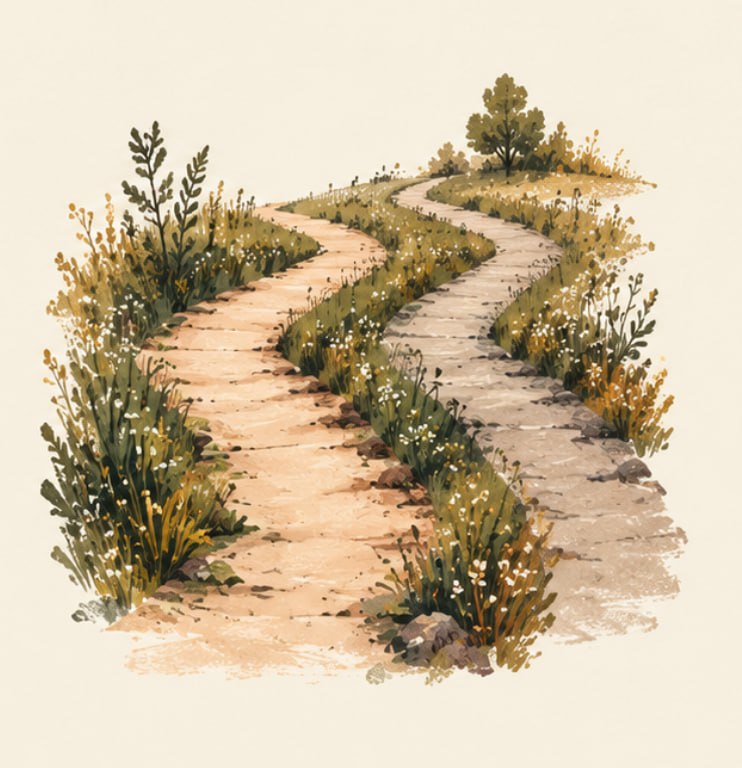
I've come to see believing in someone as sweeping their path a little instead of showing them the exact path to take. The sweeping comes with a kind of relational ground that feels steady enough for someone to take a risk without having to worry about losing our connection.
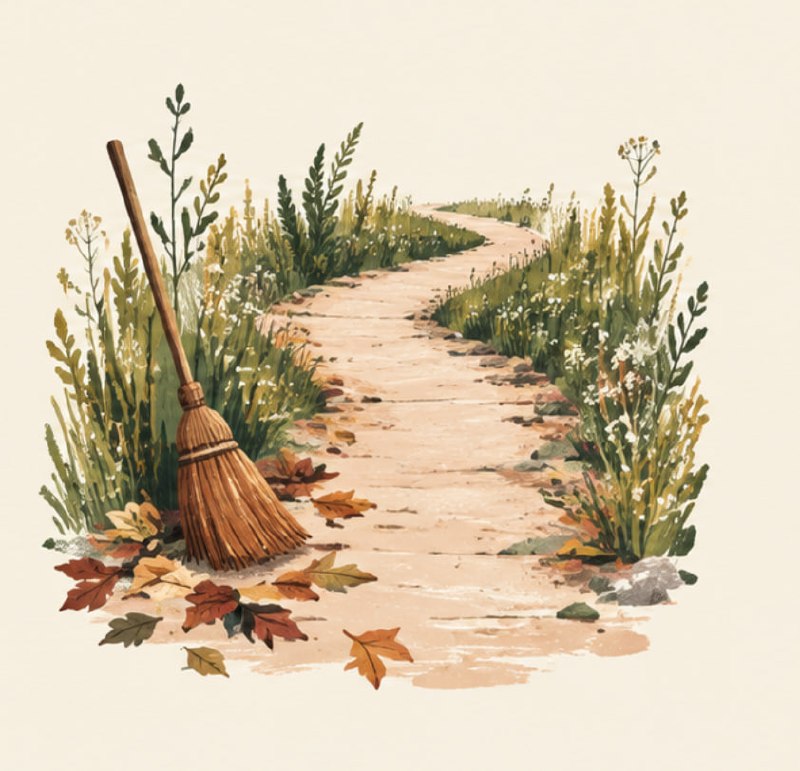
When we "hand someone a script", it can absolutely be an offering of support. But it can also come with pre-written expectations. Holding open space leaves room for someone to find something we couldn't have planned for. This is where the privilege of teaching I described before comes so alive. There's a kind of magic in getting to witness someone discover something in themselves that neither of you could have planned.
We still provide structure, teach, encourage, and set boundaries. We sometimes offer a perspective that they can't yet hold on their own. The hope is that, over time, they have more room to hold that perspective, question it, change it, or develop one of their own.
It's a difficult balance, and I think most of us will keep finding ourselves on both sides of it. But there's something powerful in being willing to notice where our own expectations end and their agency begins. I promise you, there's magic there.
Believing in someone is sweeping their path a little instead of showing them the exact path to take.
On holding space
Dr. Becky Kennedy
A relatable conversation exploring how our own adult worries can lead us to step in too soon, and how to stay grounded with a child without micromanaging their experience.
The Guardian, 2016
A review of Gopnik's argument that raising children isn't about shaping them into a specific outcome — it's about creating the conditions for them to grow in ways none of us can predict. A grounding read for parents and educators alike.
A question to carry forward
Where does your encouragement end and their agency begin?
The next time you feel the urge to nudge, steer, or celebrate a child's choice, pause and ask yourself: am I making space for them, or am I making space for the version of them I'm hoping for?
There's a kind of magic in getting to witness someone discover something in themselves that neither of you could have planned.
One email per month. Unsubscribe anytime.
All Issues